Wupperthal was founded in 1830, and it has been a working mission village — never a museum — ever since.
| Founded | 1830, by the Rhenish Missionary Society |
|---|---|
| Founded by | Theobald von Wurmb and Johann Gottlieb Leipoldt, two German missionaries |
| Named for | The Wupper river and valley in the German Rhineland, home of the missionaries |
| Where | The Tra-Tra valley, 72–75 km southeast of Clanwilliam, about 250 km from Cape Town |
| Became Moravian | 1965 |
| Settled by | Khoi families first, then freed slaves after 1838 |
| The church | The whitewashed mission church dates from the 1830s |
How the village began
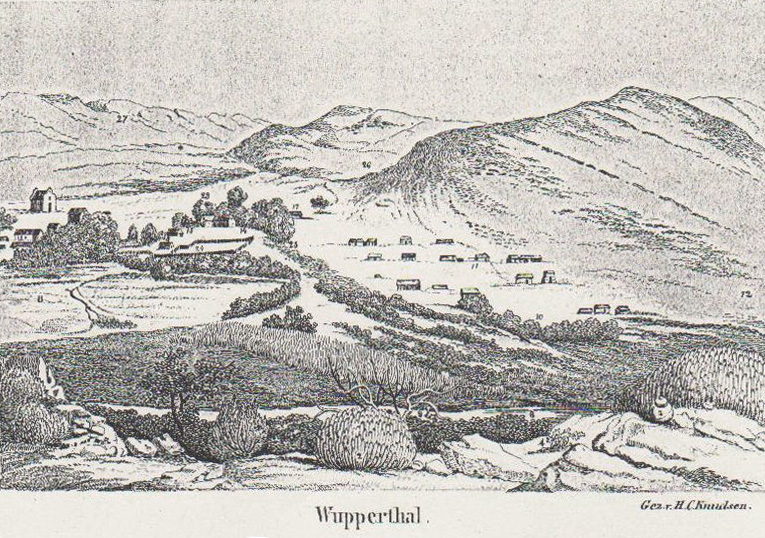
Two German missionaries of the Rhenish Missionary Society — Theobald von Wurmb and Johann Gottlieb Leipoldt — founded Wupperthal in 1830, in the isolated Tra-Tra valley, and named it for the Wupper, the river back home in the Rhineland. Seven Khoi families settled first; freed slaves followed after emancipation in 1838. Together they farmed the valley floor, made shoes and hats, and built the whitewashed, thatch-roofed cottages in rows against the mountain — the village you still see today. In 1965 the mission passed to the Moravian Church.
Making things by hand
From the start Wupperthal was a village of trades — carpentry, hat-making, gardening, and above all shoemaking. Its shoe factory, founded in 1836 (some sources say 1834), is the oldest in South Africa, and it was the first commercial maker of the veldskoen. For nearly a century its hand-sewn vellies were known across the country for comfort and craftsmanship. A tannery and a glove factory ran here for many years too, and the village still dries and rolls its own tobacco into roltabak, alongside rooibos, dried fruit and dried beans.
Rooibos & vellies ›The village today
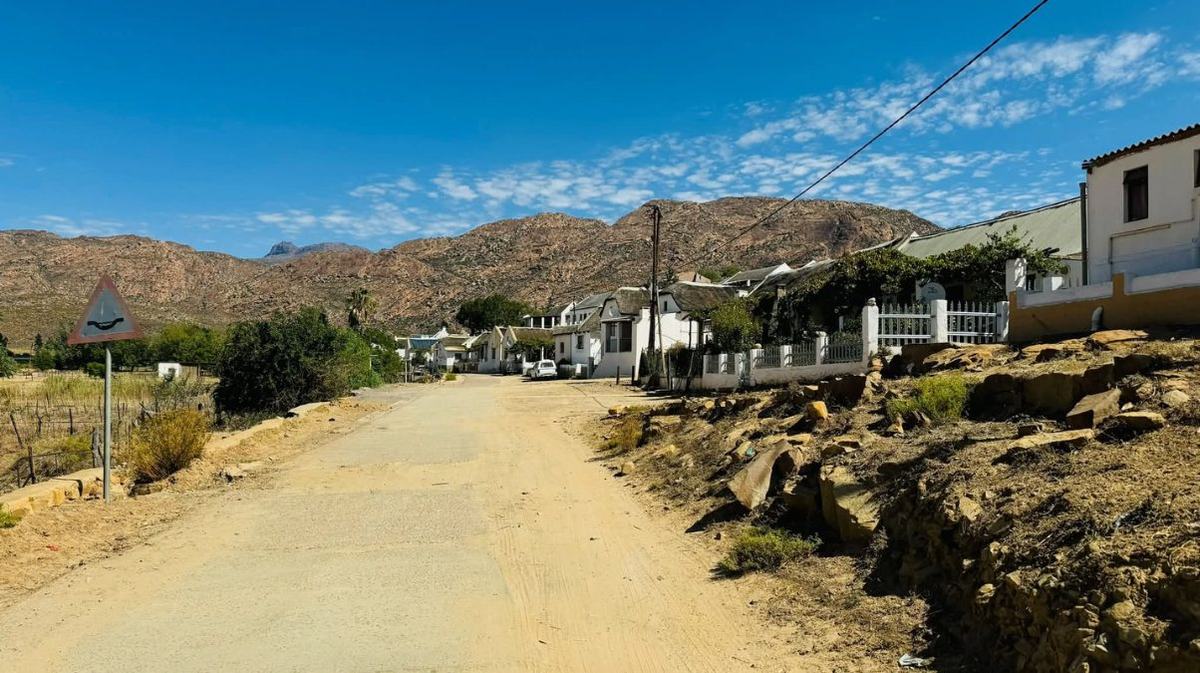
Wupperthal is still a working mission village of roughly 700 people, laid out along one winding street with water running in furrows beside it. Around that street: the thatched Moravian church, a grocery store and tea room, a post office, a school with two hostels, and a community hall. Families live off small-scale farming and livestock; the cash crop is rooibos, and the mountains above are grazed by goats.
Die Werf — the communal heart
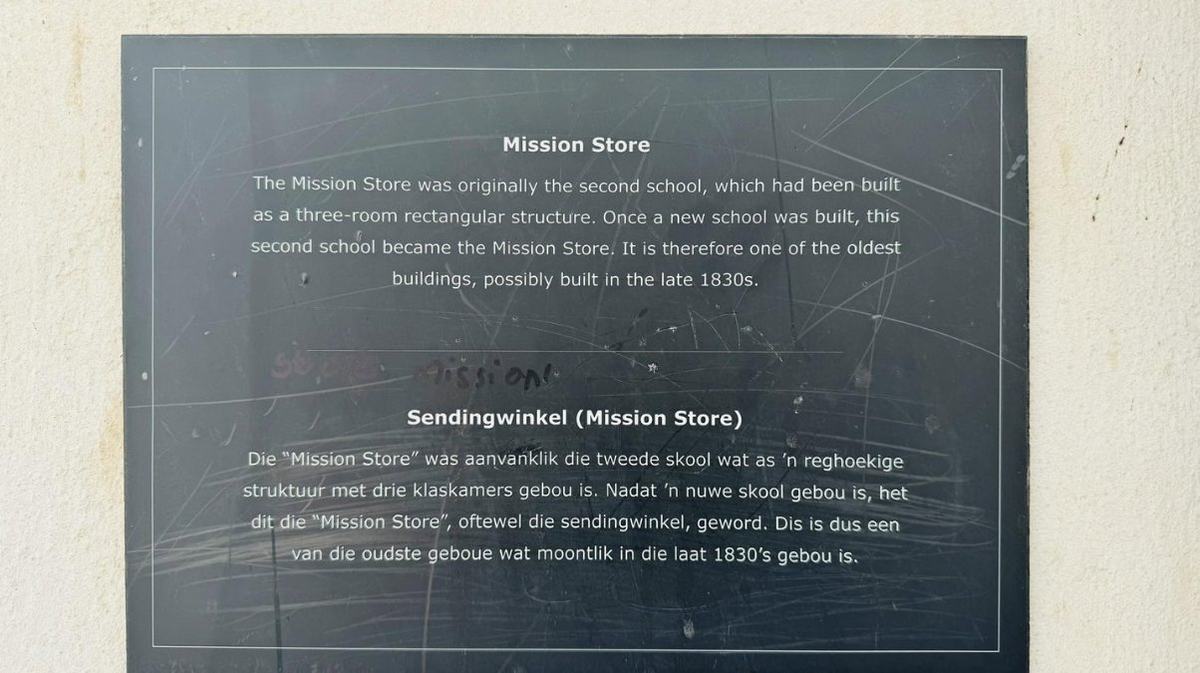
The old communal yard known as Die Werf holds the community hall, the school hostel, the butchery, a guesthouse, a rooibos cosmetics shop, the Louis Leipoldt Museum, the parsonage, and the Mission Store. That store began as the village's second school — a three-room rectangular building, probably put up in the late 1830s — which makes it one of the oldest buildings still standing. Today it houses Lekkerbekkie, the village restaurant and tea room.
The 2018 fire, and the rebuild
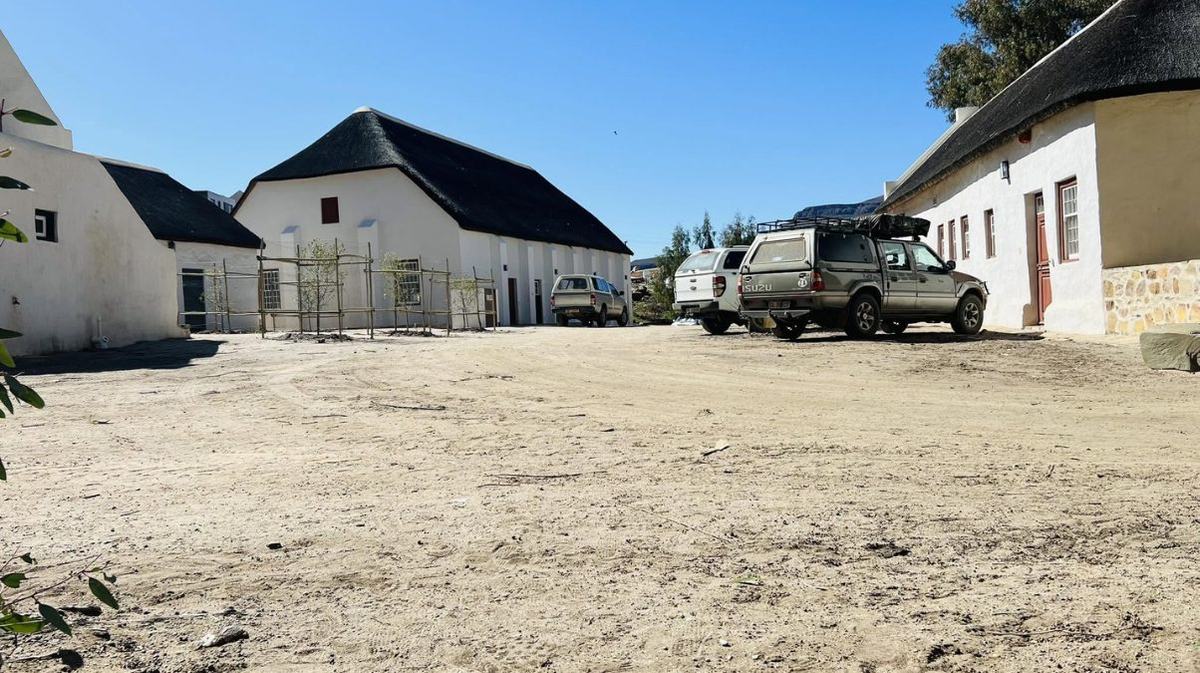
In December 2018 a fire swept through the historic centre and destroyed some 52 buildings, Lekkerbekkie and much of Die Werf among them. Rather than let the village fade, the community — with the Cape Institute for Architecture — rebuilt it, cottage by cottage, in clay brick and poplar beams, with attention to the heritage detail. Die Werf was back up in a little under 18 months. It's the same story the village has always told: the people who stayed, building it again.
Sources: see the full reading list — Wikipedia; South African History Online; The Heritage Portal; Daily Maverick; Getaway; Tourism Update; BusinessTech (2026); West Coast District Municipality. Some dates (such as the exact year the church was consecrated, and whether the shoe factory dates from 1834 or 1836) vary between sources and are hedged here. One widely-read article gives 1865 for the handover to the Moravian Church; the date used here, 1965, is the one carried by Wikipedia and SAHO.
Last updated July 2026